You set up your day with the best intentions—students will come in focused, ready to learn a new skill, maybe even refine a technique you’ve been building all week.
And then they walk through the door.
Their minds are on one thing: play.
The energy is great, the enthusiasm is real—but focus? That’s another story.
That’s what makes literacy in PE so challenging. Every step we take toward reading and writing can feel—though not accurately—as if we’re stepping away from activity. Too often, our literacy efforts become time-consuming and movement-stopping, when what we really need are tools that complement both.
I kept thinking there had to be something that could bridge the gap—something quick, meaningful, and easy to build into routine.
Turns out, there was.
I call them Position Cards.


I wanted a tool that could help focus the energy during moments like this—when excitement is high, attention is scattered, and momentum could go in a dozen directions at once. The Position Cards don’t replace movement or slow things down; they simply create a brief, purposeful pause that turns energy into focus and focus into movement.
Like I’ve always said, literacy in PE should live in the margins—woven into the transitions, discussions, and moments that serve both the student and the teacher in purpose and value.
The Position Cards are a perfect example of that.
What They Are
On the surface, they’re simple—each card features a different basketball position on the front, complete with a short description of its role on the court. On the back, there’s a prompt: a quick question that gets students thinking about how their own strengths, mindset, and habits connect to that position.
It’s a small thing, but it completely changes the tone of class. Rather than letting energy scatter or attention fade, students take a moment to think and move—to process, connect, and mentally step into the work at hand.
What I’ve learned over the years is that students want to reflect—it’s not the act of reflecting they resist. It’s the way we often ask them to do it. Generic prompts like “What did you learn today?” rarely mean much because they’re too broad to feel relevant or personal—they don’t connect to what actually happened in class.
The prompts on these cards change that. They give students something specific and meaningful to think about—a lens through which they can see their role, their performance, and their progress in a way that resonates. The reflection becomes less about compliance and more about relevance and connection.
From Reflection to Routine
As I refined my approach to student reflection, I realized I needed a tool to support one of my favorite literacy-based tasks: The Court Vision Assessment. That’s where the Position Cards came in. They help students engage with the same ideas—reflection, identity, and connection—but in smaller, daily moments throughout the unit.

In this task, students are asked to think deeply about which basketball position best fits them—not just based on skill level, but on their natural strengths, instincts, and the way they approach the game.
They respond to prompts like:
Which position do you think you would be best suited for?
Why do you feel this position fits your skills, strengths, and personality?
What qualities or abilities do you have that would help you succeed in this position?
From day one, students frame everything they do through the lens of the Court Vision Assessment. Sure, we’re focused on learning basketball skills—but when that work’s grounded in reflection, their thinking gets sharper, more personal, and way more meaningful. By the end of the unit, they pull it all together in the full Court Vision Assessment—a written reflection that connects their physical growth to the mental side of the game.
The Position Cards can be used throughout the unit, alongside other literacy tools, to keep that reflective habit in tune. Students begin to look at the game differently. They not only recognize their own growth, but develop a stronger appreciation for the diverse skills and efforts of those around them.
Even the experienced players benefit. They already know the positions and understand the flow of the game, but the literacy piece challenges them in a new way—it asks them to put language to what they already do intuitively. They practice giving context to their decisions, describing their actions with precision, and using sport-specific vocabulary to explain the why behind their play.
That’s when the classroom starts to change—not just in skill, but in mindset.
From “I’m Not an Athlete” to “Where Do I Fit?”
Every PE teacher knows the line:
“I’m not an athlete.”
“I’m not good at this.”
That mindset is one of the hardest battles we fight. The Court Vision Assessment and Position Cards work together to flip that script.
Instead of deciding whether or not they “fit” in a sport, students start asking where they fit. They reflect on their natural strengths, their mindset, and their physical abilities. Maybe they see themselves as the quick defender who anticipates plays before they happen, the rebounder who thrives in physical matchups, or the playmaker who reads the floor and creates opportunities for others.
That small reframing—from if I belong to how I belong—builds confidence, inclusion, and genuine engagement.
I’ve watched this play out in a lot of my classes, but one student’s story captures it perfectly.
At the beginning of the unit, she was quiet, cautious, and hesitant to call herself “an athlete.” But as she began exploring the different roles—seeing that each position demanded unique abilities, mindsets, and forms of leadership—something shifted.
By the end of the unit, she wasn’t just participating in basketball; she was invested in it. She understood the game, her place within it, and her ability to contribute to her team. The literacy work—reading, writing, discussing, reflecting—gave her a vocabulary for confidence. She didn’t just learn to play the sport. She learned to see herself in it.
That’s the kind of shift literacy can create when it’s embedded with purpose—students stop performing for the sake of activity and start performing with meaning.
Beyond Basketball
While this set focuses on basketball, the idea behind it applies to any team sport. The concept of “positions” exists everywhere—volleyball, soccer, football, even ultimate frisbee. Every game has roles, responsibilities, and spaces where different strengths shine.
That’s what makes this tool so versatile. Once students understand the structure—read, reflect, discuss—it can be adapted for any unit. The key isn’t the sport; it’s the thinking it sparks.
Why It Works
✅ Engagement:
High energy isn’t the enemy—it’s a resource. The Position Cards channel that energy into focus, giving students a mental cue before a physical task. That quick shift from chaos to curiosity helps set a productive tone for everything that follows.
✅ Literacy:
Each card connects reading, writing, and verbal reasoning to movement. Students read position descriptions, discuss their reasoning with peers, and write short responses explaining their fit—all tasks that mirror academic literacy practices. In doing so, they build vocabulary, practice descriptive and analytical writing, and learn to communicate ideas with clarity and evidence—skills that transfer far beyond PE. And in doing so, they also deepen their engagement in the physical tasks of PE—improving performance, precision, and confidence as their connection to the sport grows stronger.
✅ Confidence:
By reflecting on what they can do rather than what they can’t, students redefine success. They start to see value in their strengths, contributions, and decision-making—no matter their skill level or athletic background.
✅ Culture:
Routine reflection creates buy-in. When students expect to think, respond, and share ideas, literacy becomes a normal part of the flow of class rather than an interruption. Over time, that habit builds a culture of ownership and respect.
✅ Versatility:
The format is easy to adapt for any team sport—or even non-team settings like fitness circuits or cooperative games. Once students understand how to think about roles, effort, and contribution, the same reflection framework applies anywhere movement happens.
These cards are just one example of how literacy can bring clarity, confidence, and connection to PE.
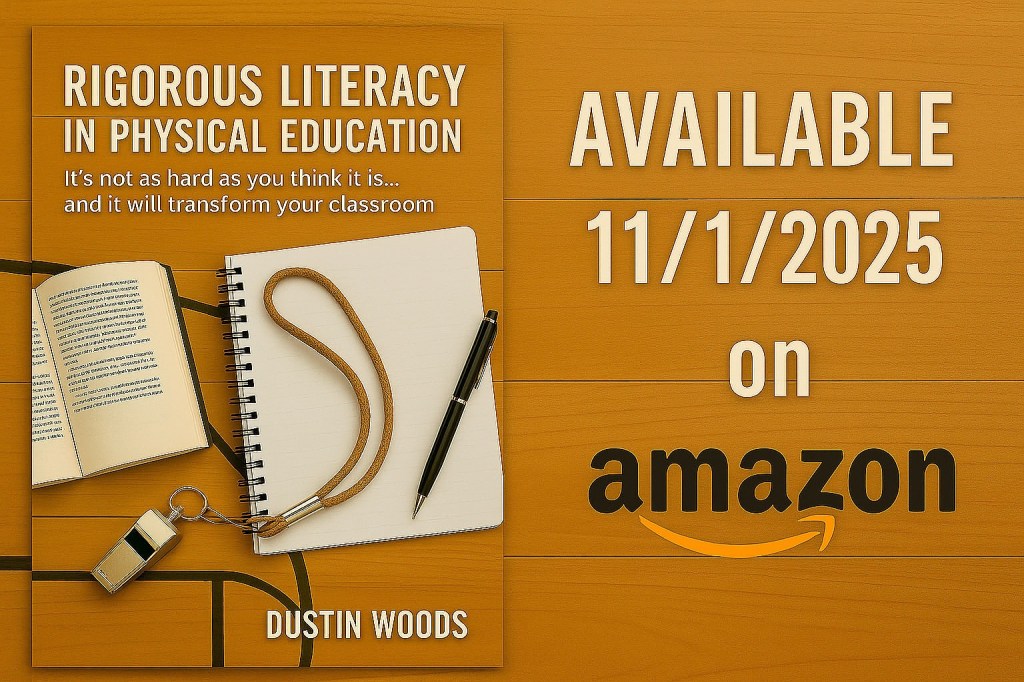
In Rigorous Literacy in Physical Education, you’ll hear stories just like this one—of students who found their voice, their place, and their motivation through meaningful literacy work in PE. The book also provides a full overview of the Court Vision Assessment, along with a variety of classroom tools—like the Position Cards—that support and extend it. Together, they show how reflection, writing, and movement can work in harmony to build confidence, clarity, and connection in the gym.

The book releases November 1, with digital pre-orders available now.